REGISTER NOW TO BECOME A MEMBER


The Infectious Disease Bill 2020: Our Review and Comments.
MANDATORY VACCINATION. The Nigerian Christian Graduate Fellowship (NCGF) as opposed to the provisions of the Bill which make vaccination mandatory, would be an affront on the fundamental human rights and civil liberties of Nigerians as enshrined in the Nigerian Constitution

- INTRODUCTION
a. Long Title. This Bill which is before the National Assembly is called:
A BILL FOR AN ACT TO REPEAL THE QUARANTINE ACT AND ENACT THE CONTROL OF INFECTIOUS DISEASES ACT, MAKE PROVISIONS RELATING TO QUARANTINE AND MAKE REGULATIONS FOR PREVENTING THE INTRODUCTION INTO AND SPREAD IN NIGERIA OF DANGEROUS INFECTIOUS DISEASES, AND FOR OTHER RELATED MATTERS.
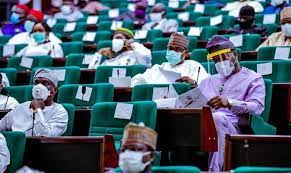
The Bill was sponsored by the Speaker of the House, Femi Gbajabiamila, and two other members: Paschal Chigozie Obi, member representing Ideato North /Ideato South Federal Constituency of Imo State, and Rep. Sununu Tanko Yusuf, member representing Yauri/Shanga/Ngaski Federal Constituency of Kebbi State.
b. Short Title. INFECTIOUS DISEASES BILL
c. It is our opinion that both the long title and the short titles of the Bill are misleading because a closer look at the contents of the Bill shows that the Bill not only regulates or addresses control and prevention of infectious diseases but other diseases that are not infectious.
This is clear from Section 5 (1) (a) and (1)(b) reproduced below:
SECTION 5. Public Health Surveillance Programmes, etc.
(1) The Director-General may, from time to time, institute public health surveillance programmes or undertake epidemiological investigations or surveys of people, animals or vectors in order to determine the existence, prevalence, or incidence, or to determine the likelihood of a possible outbreak, of —
(a.) any infectious disease; or
(b.) any other disease which the Minister, by notification in the Gazette, declares to be a disease to which this section applies.
- MANDATORY VACCINATION. The Nigerian Christian Graduate Fellowship (NCGF) as opposed to the provisions of the Bill which make vaccination mandatory, would be an affront on the fundamental human rights and civil liberties of Nigerians as enshrined in the Nigerian Constitution, especially Sections 39 and 40, the African Charter on Human and Peoples’ Rights and the United Nations Charter on Human Rights 1948.
Thus, Sections 6(1) and (2), and Sections 30, 47, and 48 of the
Bill gives the impression that vaccinations will be mandatory for Nigerians.
a. Section 6 – Medical Examination and Treatment
b. Section 30 – Vaccination and other prophylaxis
c. Section 47 – Power to order certain persons to undergo vaccination or other prophylaxis
d. Section 48 – Vaccination
Vaccination is generally voluntary, unless it is in a state of emergency as provided by Section 45 of the Nigerian Constitution, hence the NCGF is opposed to the sections of this Bill that make vaccination to be mandatory and compulsory, particularly in a democracy like Nigeria. Flu, chickenpox, shingles, and other vaccines, for example, are voluntary in the USA which is a democracy like Nigeria.
Making vaccinations mandatory and compulsory, apart from being an infringement on the fundamental rights and civil liberties of Nigerians as discussed above and below, equally gives credence to some conspiracy theories circulating in these days of the COVID-19 pandemic, many of which the NCGF does not agree with. In particular, in this regard, is the theory of purported new world order through mandatory vaccinations along with implant of RFID microchips.
The NCGF believes that these conspiracy theories, which the sections that make vaccinations mandatory in this Bill appear to give support to, will, unfortunately, cause many Nigerians to shun and run away from vaccinations generally. This would be inimical to the health of the citizens. However, the NCGF believes in the effectiveness and usefulness of proven vaccines, but will not support any moves to make any vaccine mandatory or compulsory except in a state of emergency or police state.
- CURTAILMENT OF THE FREEDOM OF MOVEMENT AND RIGHT OF ASSOCIATION.
Section 13 of the Bill which is on ISOLATION OF CERTAIN PERSONS, but particularly Sections 13(1) and 13(4), are perceived by the NCGF as a serious curtailment of the freedom of movement and right of association of Nigerians. The NCGF is therefore strongly of the view that by the combined effect of sections 39 and 40 of the 1999 Constitution as well as Article 11 of the African Charter on Human and Peoples’ Rights, the right to assemble freely, abrogated by the effects of Sections 13(1) and 13(4) of the Bill, are all in violation of the fundamental right to peaceful assembly and association.
We of the NCGF, therefore, say unequivocally that it is only in a state of emergency as provided by Section 45 of the Nigerian Constitution that these rights can be suspended, and not through any act as envisaged by this Bill.
- UNNECESSARY WIDE POWERS GIVEN TO THE DIRECTOR GENERAL OF THE NIGERIAN CENTER FOR DISEASE CONTROL (NCDC). The NCGF is of the view that the Bill gives too much and very wide powers to the Director-General of the Nigeria Centre for Disease Control (NCDC), which powers can easily be abused by being used to infringe on the civil liberties and fundamental human rights of Nigerians as explained in 3 above. Below are some examples of Sections that give such wide powers to the Director-General. It must be remembered that the NCDC Director-General is not an elected official, like a president, governor or local government chairman, and therefore should normally not have such unconstitutional powers vested in him or her:
a. Section 6 – Medical examination and treatment
b. Section 12 – Wakes and disposal of corpses
c. Section 13 – Isolation of certain persons
d. Section 14 – Surveillance
e. Section 15 – Isolation area
f. Section 16 – Abatement of overcrowding. This section and Section 19 are of grave concern to the NCGF because they can be used against religious organizations like churches and Christian fellowships.
g. Section 19 – Prohibition or restriction of meetings, gatherings or public entertainment
h. Section 24 – Power of an enforcement officer to order the destruction of a house building or anything.
(One wonders whether it was the envisaging of such powers that made Governor Wike of Rivers State demolish the property of a citizen who was alleged to have flouted the COVID-19 restriction orders!)
i. Section 30 – Vaccination and other prophylaxis: This section gives the Director-General the discretion as to what vaccination a person coming into or going out of Nigeria must take.
j. Section 38 – Power of Director General or Port Officer regarding food and water
k. Section 39 – Importation of vectors of diseases
l. Section 44 – Medical examination of persons arriving in Nigeria
m. Section 70 – Protection from personal liability. This Section which gives immunity from personal liability for the Director-General, any health officer, any port officer, any police officer, etc., is so wide and sweeping that it is almost like the immunity granted to some public and elected officials; hence is very subject to abuse.
Another area of grave concern is that this bill takes away the powers of governors to issue executive orders in times of health emergencies under the Quarantine Act which this Bill attempts to repeal, and vests such powers on the Director-General of NCDC.
This, to the NCGF, is another attempt to move Nigeria more towards a unitary system of government where control is located at the center. This was the case of Singapore from where this Bill was copied hook line and sinker and during the dictatorship of the Nigerian military, especially in the days when Muhammadu Buhari was the Military Head of State wielding draconian powers. This is contrary to the stance of NCGF and other well-meaning organizations and individuals that Nigeria is restructured to reflect true federalism as we had in the First Republic. We have an example of true federalism in the USA where, in these days of COVID-19, governors of states and mayors of cities have the constitutional powers to issue orders as they relate to their states and cities, and not subject to total control by the government at the center. What the CDC of the USA does are issue guidelines that may inform the decisions of the federal and state governments as well as the mayors in coming up with executive orders.
- THERE IS AN EXISTING NCDC ACT. It must be noted that Nigeria has an extant Center for Disease Control and Prevention (Establishment) Act, 2018 (simply referred to as the NCDC Act) already; hence this Bill which is being sponsored by the Speaker under some suspicious premise is not needed.
- ANTI-DEMOCRATIC ACTIONS. The NCGF is also concerned about a report in the Vanguard Newspaper of 14th May 2020 that the House of Representatives has taken a decision to exclude the Governor of Sokoto State, who was a former Speaker of the House, from its consultative meeting with the Governors’ Forum on the Bill because of the alleged “misguiding” by the Sokoto State Governor of the other Governors to rise against the Bill. This stance of the House to exclude the Governor of Sokoto State is to the NCGF basically against the Constitution and a threat to our democratic institutions.
- IT WAS A BILL COPIED FROM SINGAPORE. The NCGF is also very concerned about the fact that this Bill which was sponsored by the Speaker of the House and others is almost a 100% copy of the Singapore Infectious Diseases Act 1977, showing clearly that some of our legislators lack the depth of thought and originality of ideas that are in compliance with our local circumstances and beneficial to Nigeria. By copying the Singaporean law hook line and sinker, these legislators also demonstrate laziness and exhibit a “copy and paste” mentality which has been one of the major shortcomings of governance practice in Nigeria as we are seeing under the covid-19 guidelines and regulations of the Federal Government. That is, the sponsors of the Bill, in copying almost 100% a Singaporean law, failed to understand that in 1977 Singapore was under the dictatorship of a maximum ruler, Lee Kuan Yew; hence the mandatory provisions about vaccination in the Bill. Such provisions definitely cannot be accommodated or acceptable in a system that is supposed to be federal and democratic.
Thank you for your attentive consideration of this paper